
AWS Glue Local Development with Docker and Visual Studio Code

As described in the product page, AWS Glue is a serverless data integration service that makes it easy to discover, prepare, and combine data for analytics, machine learning, and application development. For development, a development endpoint is recommended but it can be costly, inconvenient or unavailable (for Glue 2.0). The AWS Glue team published a Docker image that includes the AWS Glue binaries and all the dependencies packaged together. After inspecting it, I find some modifications are necessary in order to build a development environment on it. In this post, I’ll demonstrate how to build development environments for AWS Glue 1.0 and 2.0 using the Docker image and the Visual Studio Code Remote – Containers extension.
How to Secure your Instance Metadata Service on AWS

In this two-part series, I will explain and demonstrate how to update your EC2 instances to use IMDSv2 as well as automate this process through the use of SSM Documents that can be provisioned within your CloudFormation templates.
Terraform pipeline to ingest streaming data into Snowflake using Amazon Kinesis

Demonstration of how one can use terraform to easily set up a data streaming pipeline to ingest twitter data into snowflake via Amazon Kinesis data firehose.
re:Invent 2020 Wrap-Up: Infrastructure Keynote with Peter DeSantis
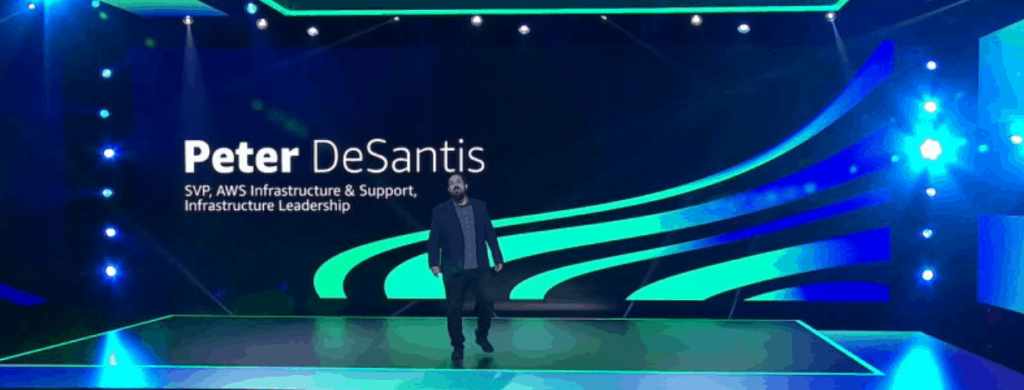
This post covers some of the take-aways from the Infrastructure Keynote with Peter DeSantis at re:Invent 2020.
re:Invent 2020 wrap-up: Andy Jassy Keynote

A quick overview and wrap-up of the major themes and product launches from the Andy Jassy Keynote at AWS re:Invent 2020.
Migrating SQL Server to PostgreSQL

Some of the challenges and pitfalls that await you on this journey of migrating your SQL Server data and codebase over to PostgreSQL, as well as a discussion about the AWS tools available to help you along the way.
Intro to AWS Amplify: build a multi-tenant SaaS app [Part 2 – App Setup]

Following on from Part 1 in our intro to AWS Amplify series, in Part 2 we will create the skeleton of our new Amplify application and host it in a repository.
Intro to AWS Amplify: build a multi-tenant SaaS app [Part 1 – Preparation]

Our new series of articles see us walk through the process of building out a web application using AWS Amplify. It will be a typical todo application written in React and Node JS and we’ll use the Amplify CLI to configure and deploy it into both a test and production environment.
MLOps – Machine Learning 2.0

The future of machine learning is MLOps: automating as much as possible for data scientists, so that they can iterate and get rapid feedback.
Exploring Amazon Sagemaker Studio and AutoPilot

SageMaker Studio was announced at AWS re:Invent 2019, as a web-based IDE for working with Machine Learning models. It incorporates the other SageMaker components also released at the same time: AutoPilot, Debugger, Model Monitor, and Notebooks.