
Zero downtime RDS Migration

Amazon Relational Database Service (Amazon RDS) makes it easy to set up, operate, and scale a relational database in the cloud. It provides cost-efficient and resizable capacity while automating time-consuming administration tasks such as hardware provisioning, database setup, patching and backups.
AWS Glue Local Development with Docker and Visual Studio Code

As described in the product page, AWS Glue is a serverless data integration service that makes it easy to discover, prepare, and combine data for analytics, machine learning, and application development. For development, a development endpoint is recommended but it can be costly, inconvenient or unavailable (for Glue 2.0). The AWS Glue team published a Docker image that includes the AWS Glue binaries and all the dependencies packaged together. After inspecting it, I find some modifications are necessary in order to build a development environment on it. In this post, I’ll demonstrate how to build development environments for AWS Glue 1.0 and 2.0 using the Docker image and the Visual Studio Code Remote – Containers extension.
Deliver the modern experiences your customers need with Amazon Connect

Anyone whose been following the Cevo blog for a while knows that we are fans of the Amazon Connect product. Originally launched back in 2017, Amazon Connect is a contact centre as a service (CCaS) solution that offers easy, self-service configuration and enables dynamic, personal, and natural customer engagement at scale. However, like any AWS service, it’s not without its pitfalls and problems as shown in our review of the product last year (https://cevo.com.au/post/the-good-bad-ugly-amazon-connect/). Well, it’s another year, and the product team has been hard at work adding new features and addressing customer feedback. In this article, we will take a look at what’s been changed/added to the service over the past 12 months as well as take a look at what’s in store for the product going forwards.
Adding Authorization to a GraphQL API

Authorization is the mechanism that controls who can do what on which resource in an application and it is a critical part of an application. In this post, I’ll be illustrating how to set up authorization in a GraphQL API using a custom directive and Oso, an open-source authorization library.
Cross Account RDS Snapshotting Automation Leveraging Pilot Light DR Strategy

An automated solution in a cost effective way to have RDS snapshots shared on a timed schedule with different AWS accounts in order to centrally manage the data also in a different location. The solution mainly caters for standing an infrastructure and bringing the system back to continue the operations for the business continuity within the approved RPO and RTO when any of the disaster events kicks in.
Benefits and usability of different AWS EC2 Access Methods

A quick guide to different EC2 access methods covering, SSH/RDP, Session Manager, EC2 Serial Console and Cloudshell.
Fast Feedback 101 [DevOps Series]

Today, I’m going to talk about fast feedback, what it is, why it’s important, and walk through an example of how we made it happen in one of our own projects.
As I write this, I’m currently waiting for a Cloudformation script update to deploy a lambda version of a product to a development environment. This is an implementation of Infrastructure as Code, where code stored in version control defines how we build, deploy, and run our product. There’s just one problem.
How to Secure your Instance Metadata Service on AWS Using AWS Systems Manager Run Commands
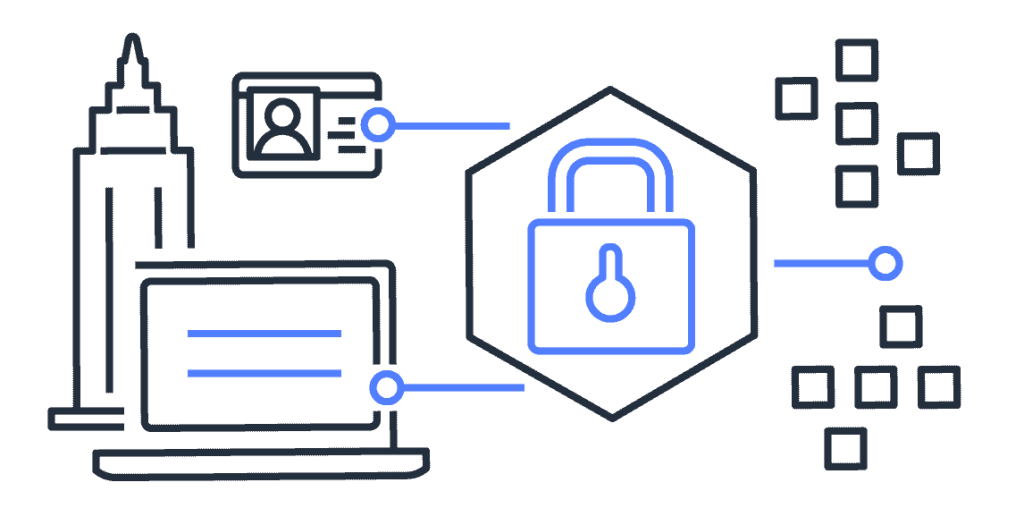
In the final part of this series, I will demonstrate how to configure EC2 Instance Metadata Service (IMDS) through the use of AWS Systems Manager (SSM) Run Commands using a tag based approach to target EC2 instances to run our IMDS commands against. In addition, I will look at automating this process using EventBridge to maintain IMDS on a periodic basis.
Cevo Achieves AWS Migration Competency and Amazon EC2 for Microsoft Windows Server Service Delivery Program Status

Cevo enables continuous evolution in enterprises through Application Modernization and Windows Migration services of legacy workloads.
Migrating to the cloud enables businesses to make substantial IT cost savings, reducing the risk of project failure, increasing security and becoming more agile to drive future innovation.
Well Architected Serverless – AWS Lambda PowerTools for Python
The AWS Lambda PowerTools for Python is an open source framework library that assists in building well-architected serverless applications. It implements a number of observability best practices across the three core observability pillars: logging, metrics, and tracing. In this post, we’ll take a sample serverless application and implement a number of observability best practices using the AWS Lambda PowerTools.