
A Journey into X-Ray for Serverless Observability

Aside from hitting all the buzzwords in the title, this is a short (?) exploration of setting up X-Ray to understand the behaviour and performance of a fully serverless integration application on AWS.
Local Development of AWS Glue 3.0 and Later
Yet another serverless solution for invoking AWS Lambda at a sub-minute frequency
Introduction to AWS CodePipeline

In today’s article we are moving on from our recent series on CloudFormation (at least for the moment) and taking a look at AWS CodePipeline. CodePipeline is an AWS managed service focused on providing a continuous delivery mechanism to help automate your releases and deployments into your AWS environment.
Getting Started With Amplify 2021: Part 3 – Development Environment Setup
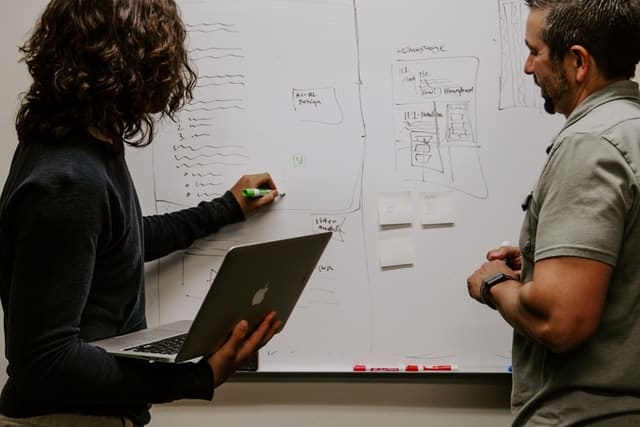
In this article will will leverage the Amplify Console to configure a CI/CD pipeline that will be responsible for deploying our application. Having a Pipeline in place will greatly reduce the time it takes to get changes into our hosting environment.
CloudFormation MultiStack Strategies

In today’s article we’re going to take it a step further and see how we can better define our input parameters. We’ll also dive into the ideas behind splitting our workloads into multiple templates and how we can pass details between them.
Getting Started With Amplify 2021: Part 2 – Application Setup

Part 2 in the 2021 edition of “Intro to AWS Amplify: Build a multi-tenant SaaS application.
Getting Started: Intro to AWS Amplify: build a multi-tenant SaaS app (2021 Edition)
This is the revised 2021 version of my Intro to AWS Amplify: Build a multi-tenant SaaS app Series originally developed as part of an event organised by the Melbourne AWS Programming and Tools Meetup. For this 2021 edition, I’ve done a complete update to cover off all the changes in Amplify over the last 2 years and included some additional tips around using cloud9.
Writing your first CloudFormation Template

If you’ve spent any time in the land of DevOps over the last few years you will have no doubt heard of the term “Infrastructure as Code”… The idea of defining your infrastructure environment in source code so that it’s easier to track changes and manage versions over time.
An Introduction to AWS CloudFormation

If you’ve spent any time in the land of DevOps over the last few years you will have no doubt heard of the term “Infrastructure as Code”… The idea of defining your infrastructure environment in source code so that it’s easier to track changes and manage versions over time.
Yet another serverless solution for invoking AWS Lambda at a sub-minute frequency

Triggering a Lambda function by an EventBridge Events rule can be used as a serverless replacement of cron job. The highest frequency of it is one invocation per minute so that it cannot be used directly if you need to schedule a Lambda function more frequently. In this post, I’ll demonstrate another serverless solution of scheduling a Lambda function at a sub-minute frequency using Amazon SQS.