
Simplify Your Development on AWS with Terraform
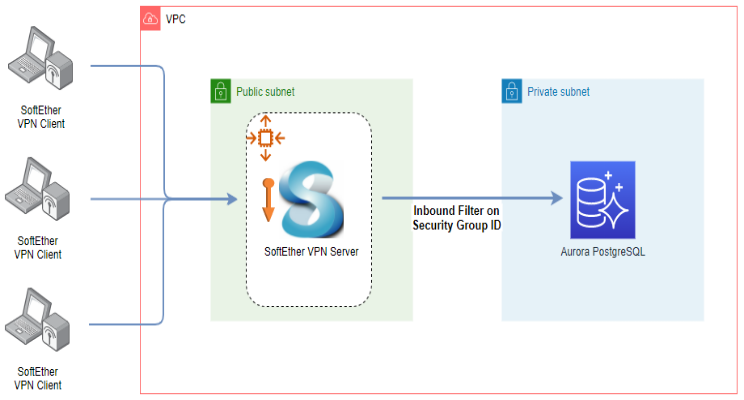
In this post, we’ll discuss how to set up a development infrastructure on AWS with Terraform. Terraform is used as an effective way of managing resources on AWS. An Aurora PostgreSQL cluster is created in a private subnet and SoftEther VPN is configured to access the database from the developer machine.
How to “Build Once and Deploy Many” for React App in CI/CD
Aside from hitting all the buzzwords in the title, this is a short (?) exploration of setting up X-Ray to understand the behaviour and performance of a fully serverless integration application on AWS.
Encoding best practices with IAM policy conditions

Aside from hitting all the buzzwords in the title, this is a short (?) exploration of setting up X-Ray to understand the behaviour and performance of a fully serverless integration application on AWS.
EMR on EKS by Example

EMR on EKS is a deployment option in EMR that allows you to automate the provisioning and management of open-source big data frameworks on EKS. It can be an effective toolto manage big data (as well as non-big data) workloads. In this post, we’ll discuss EMR on EKS with simple and elaborated examples.
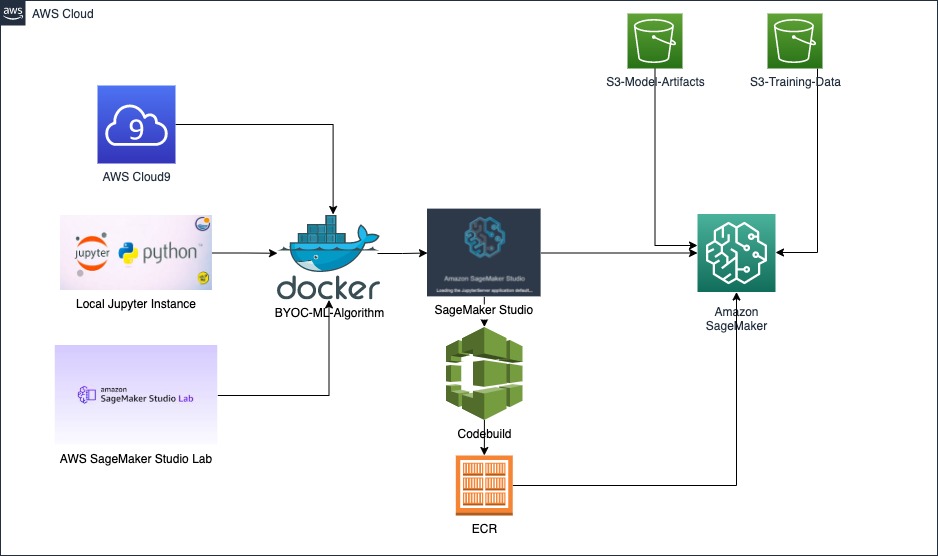
Bring your own container(BYOC) with machine learning algorithm into AWS
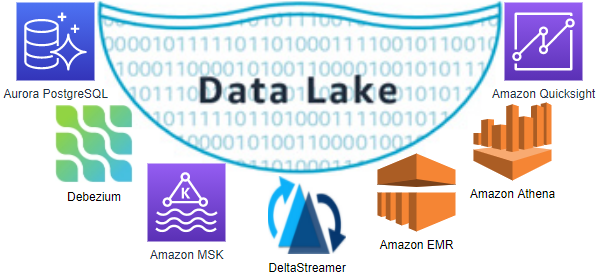
Change data capture (CDC) on Amazon MSK and ingesting data using Apache Hudi on Amazon EMR can be used to build an efficient data lake solution. In this post, we’ll build a Hudi DeltaStramer app on Amazon EMR and use the resulting Hudi table with Athena and Quicksight to build a dashboard.
Data Lake Demo using Change Data Capture (CDC) on AWS – Part 3 Hudi Table and Dashboard Creation
Change data capture (CDC) on Amazon MSK and ingesting data using Apache Hudi on Amazon EMR can be used to build an efficient data lake solution. In this post, we’ll build a Hudi DeltaStramer app on Amazon EMR and use the resulting Hudi table with Athena and Quicksight to build a dashboard.
Data Lake Demo using Change Data Capture (CDC) on AWS – Part 2 CDC with Amazon MSK
Change data capture (CDC) on Amazon MSK and ingesting data using Apache Hudi on Amazon EMR can be used to build an efficient data lake solution. In this post, we’ll build CDC with Amazon MSK and MSK Connect.
Data Lake Demo using Change Data Capture (CDC) on AWS – Part 1 Database and Local Development
Change data capture (CDC) on Amazon MSK and ingesting data using Apache Hudi on Amazon EMR can be used to build an efficient data lake solution. As a starting point, we’ll discuss the source database and CDC streaming infrastructure in the local environment.
Protecting your CloudFormation resources

A guide to protecting your CloudFormation resources from accidental deletion.
Expose AWS Lambda functions to API consumers using Apigee Edge

Apigee Edge is an easy-to-use but powerful API administration platform with capabilities including analytics and operational automation, as well…